First cohort planning · Late June / July 2026
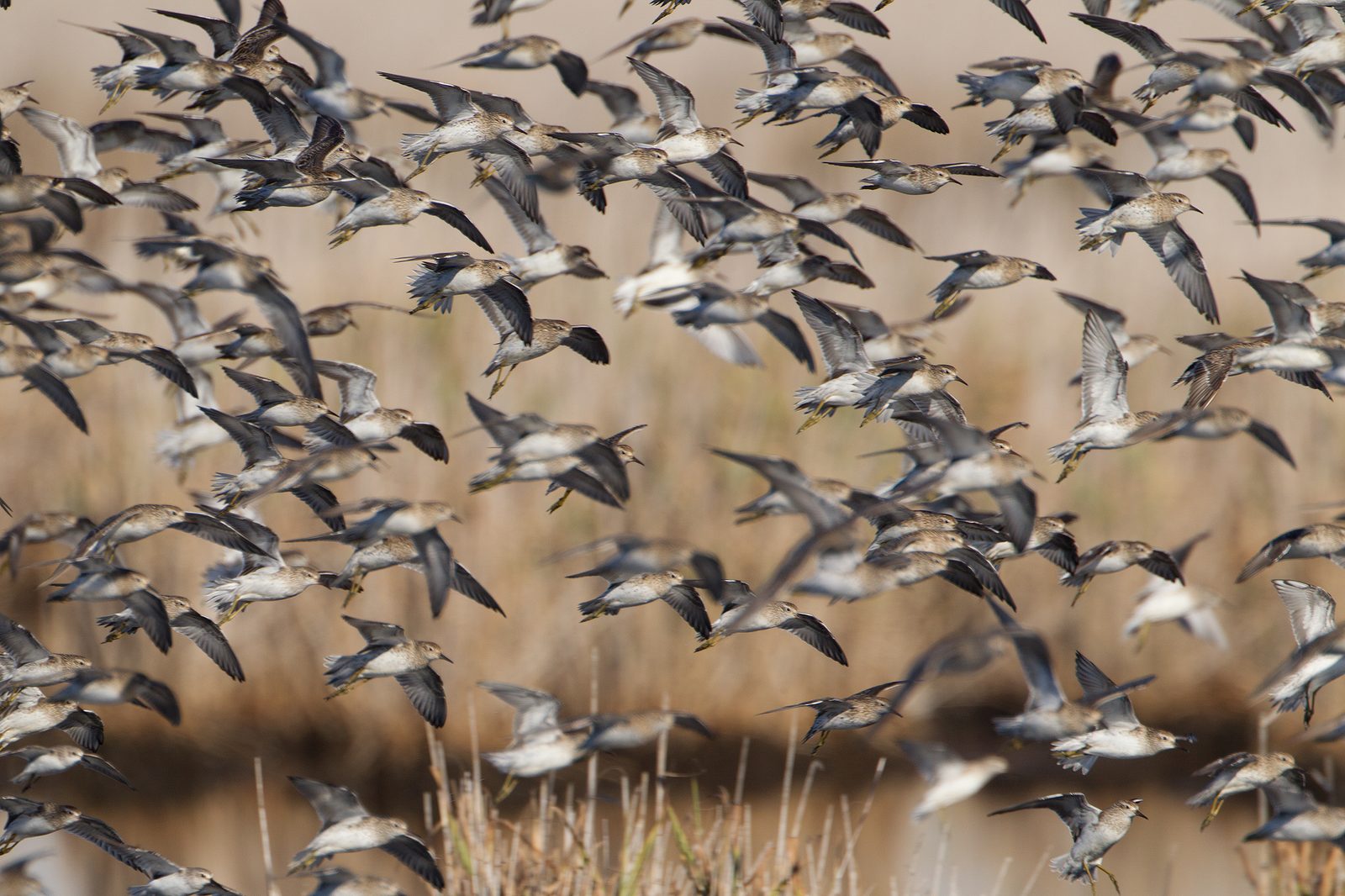
Sharp-tailed Sandpiper flock in flight
East Asian–Australasian Flyway · 50 million birds · 22 countries

The Great Gamble

Every year, fifty million birds place a bet against weather, habitat, and decisions made on the other side of the world.

We know all we need to protect them. We just need to Act.

Sharp-tailed Sandpiper flock · JJ Harrison / CC BY-SA 4.0
The Annual Circuit

Every leg is a gamble.
The outcomes cascade.

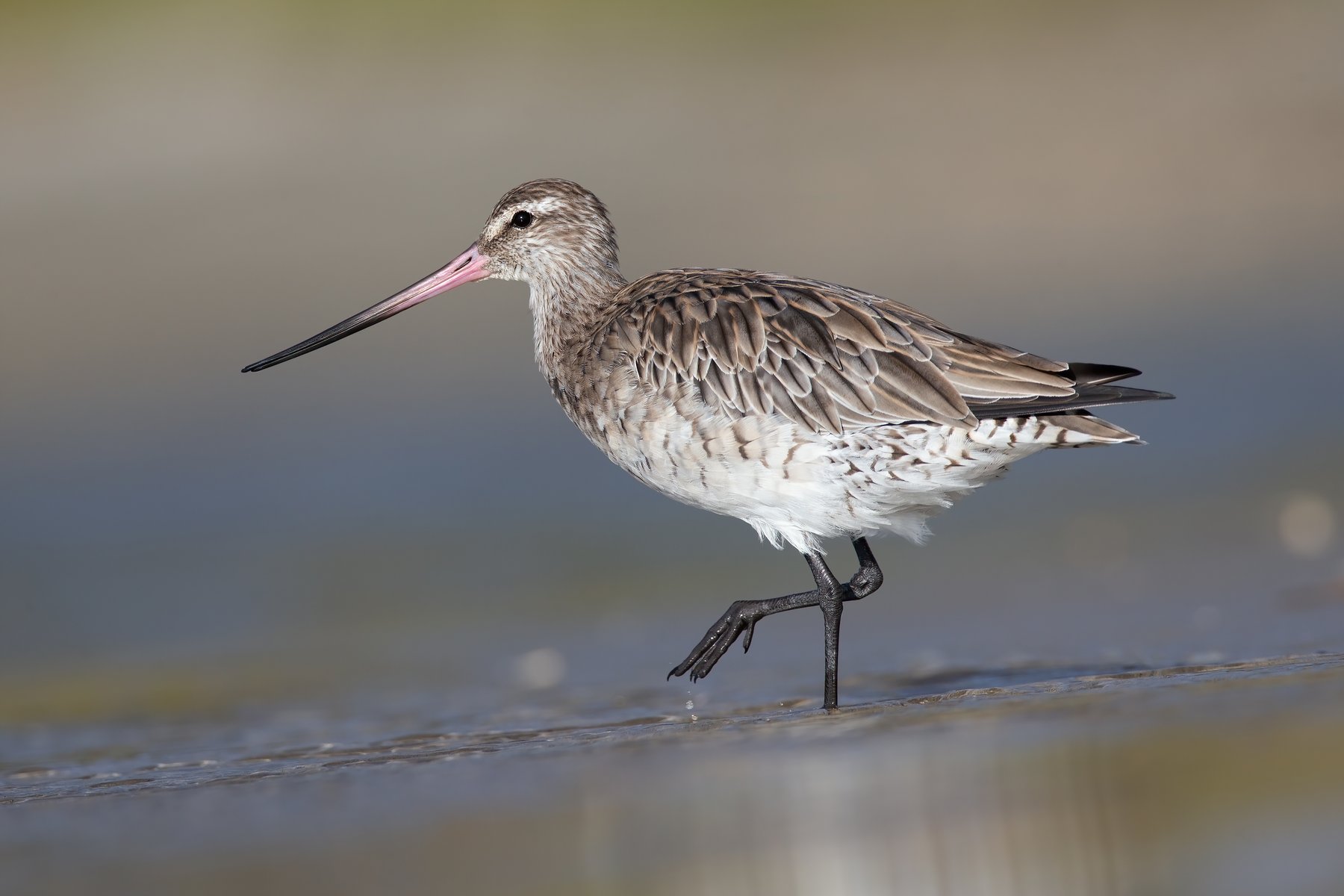
The simulator below focuses on a single species — the Bar-tailed Godwit, baueri subspecies, 126,000 individuals — because it is the most comprehensively tracked shorebird on the flyway and its annual circuit makes the pressures visible. What it faces, every migratory shorebird faces.

A godwit's year is a sequence of bets, each one staked on the result of the last. What happens in the Yellow Sea in April determines whether a bird arrives in Alaska in good enough condition to breed. What happens in Alaska in June determines how many fledglings join the southbound flight. What happens at Moreton Bay in October determines whether each bird arrives with enough reserves to survive the long wait before the northbound departure in late March.

Miss the fuel target at any stage and the cascade begins. A bird that leaves the Yellow Sea underweight arrives in Alaska too late and too depleted to breed successfully. A bird that breeds successfully but faces poor conditions at Moreton Bay may not accumulate the four grams of fat per day it needs to make the northbound crossing.

Each chip on the table below represents 1,000 birds. The history is fixed — drag the timeline to watch what happened. Cross 2026 and the future is yours to decide.

The Simulator

The Bar-tailed Godwit across seventy-six years of decisions.

1950 to 2026 is what happened. From 2026 forward is what we can still choose.

Year 2026
baueri birds 126,000
Chips on table 126
Lost since 1950 –74
From baseline –37%
HISTORY
Each chip = 1,000 Bar-tailed Godwits · Limosa lapponica baueri
Population trajectory · historical (solid red) / projected (red dashed)
200k 150k 100k
Yellow Sea tidal flats 72%
Flyway cascade, leg conditions
🌊
Yellow Sea staging
72% habitat · staging adequate
🏔
Alaska breeding
62% success · ~0.8 fledglings/pair
Pacific crossing
88% annual survival · storm risk moderate
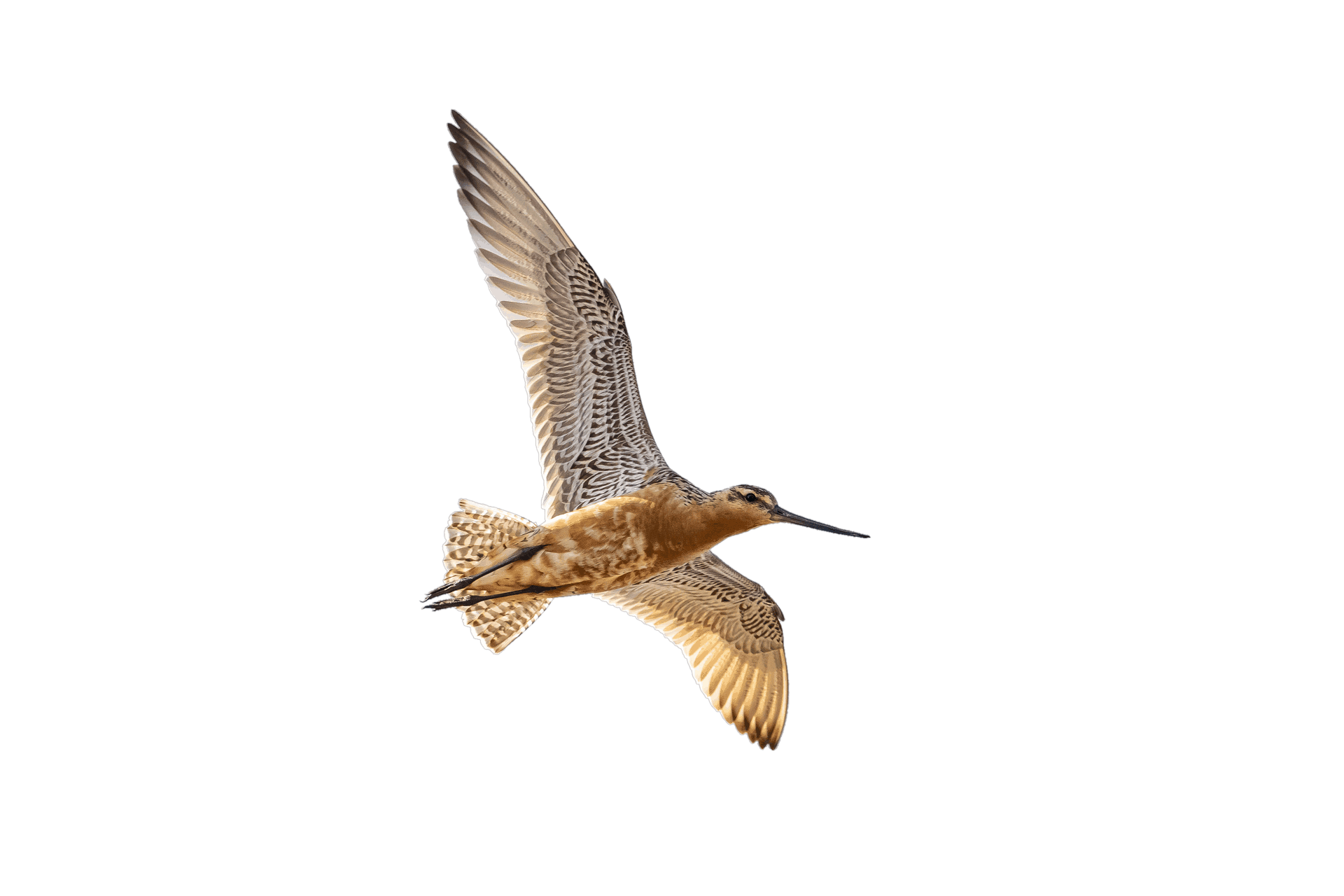
Bar-tailed Godwit in flight
Moreton Bay fuelling
5% disturbance cost · 4g/day on target
2026
← Play history or drag forward to make your decisions
19501975200020262046
Cascade consequence chain
Yellow Sea 72%
Arrival weight OK
Breeding 62%
Pacific 88%
Population holding
At current settings the population is holding near 126,000, well below the 200,000 baseline, but not in active decline. The Yellow Sea UNESCO protection is the key factor preventing further loss.
🔒 Future decisions, reach 2026 to unlock
🌊 Yellow Sea tidal flats
CRITICAL
72%
International habitat agreements, WHS extensions. Baseline 72% (28% lost since 1950, inc. Saemangeum 2006).
Godwit Moreton Bay disturbance
WARNING
5%
Energy cost from non-breeding site disturbance. Dog FID 200m, human 75m, drone 150–200m. This is where Stewards make a difference, present at the site, observant, recording.
🏔 Alaska breeding success
WARNING
62%
Fledgling production per pair. Affected by arctic warming, predator pressure, and arrival condition, which depends directly on Yellow Sea staging quality.
✈ Pacific crossing survival
DANGER
88%
Annual survival on the southbound non-stop Pacific crossing, ~11,000km, ~9 days. Climate change increases storm frequency and severity. One severe event can cause mass mortality.
Gazza · Bar-tailed Godwit
Gazza
Bar-tailed Godwit · eight EAAF flyway crossings
Press Play on the timeline. Watch seventy-six years of real data, the Yellow Sea losses, the breeding seasons, the Pacific crossings. When you reach 2026, the future decisions unlock and the real work begins. Move a slider to hear from me.
About the model

Historical data (1950–2026) is derived from published AWSG count records, Studds et al. (2017), and Yellow Sea habitat loss estimates. Population figures prior to systematic counts (~1974) are modelled backward from known data. The 1950 baseline of ~200,000 represents the estimated pre-degradation maximum for baueri. Future projections use a four-stage Leslie matrix. The model is simplified for educational use, it illustrates sensitivity to pressure changes, not precise prediction. 1 chip = 1,000 birds. At N₀ = 126,000 there are 126 chips on the table. At the 1950 baseline, there were 200.

Key references

  • Studds et al. (2017). Rapid population decline in migratory shorebirds relying on Yellow Sea tidal mudflats. Nature Communications, 8.
  • Battley et al. (2012). Contrasting extreme long-distance migration patterns in bar-tailed godwits. Journal of Avian Biology, 43(1).
  • Murray et al. (2014). Filling the gap: conserving migratory shorebirds at key stopovers. Emu, 114(2).
  • AWSG (2024). Australasian Wader Studies Group, baueri subspecies count data, east coast Australia.
  • Ma et al. (2014). Rapid loss of tidal flats in the Yellow and East China Seas. Regional Environmental Change.
  • Conklin et al. (2022). Bar-tailed Godwit tracking records. B6 record flight. Global Flyways / Movebank.
The flyway is a system. Pressure at one point propagates through all the others.
— What the simulator demonstrates
What the future looks like, mapped

Moreton Bay, polygon by polygon.

The simulator tells you the system can recover, or fail, depending on the decisions made along its length. The next question is which decisions, taken where. The Bay Roost Network map identifies the specific high-tide roosts in Moreton Bay where disturbance is currently determining outcomes for the birds shown above.

See the Bay Roost Network →

The Shorebird Steward Program equips you to reduce the disturbance cost — at Moreton Bay, on the ground, with the birds in front of you.