Birds contribute. They don’t appear on the ledger.
Moreton Bay supports a commercial and recreational fishery, a Marine Park visitor economy, and a Ramsar listing. The work that holds that together is largely done by organisms that do not appear on any balance sheet, microbes, biofilms, seagrass, mangroves, worms, crabs, and the shorebirds that feed on them.
The six services below describe what the shorebirds contribute. The longer explanations and the evidence trail sit in the Steward Course.
Six services
1Sediment stability
Shorebirds feed on worms, small crabs and molluscs that would otherwise overgraze the biofilm binding the mudflat surface. Exclusion trials on the Colne Estuary (UK) showed significantly more erodible sediment in plots where shorebirds were fenced out for 45 days.
2Nutrient cycling
The same trials recorded changes in nitrate efflux and phosphate uptake when shorebirds were absent. Guano concentrates nutrients at high-tide roosts.
3Trophic cascades
Predation by shorebirds limits crab populations that would otherwise overgraze saltmarsh. Yellow Sea sites have recorded saltmarsh die-off following sustained shorebird decline.
4Mobile links
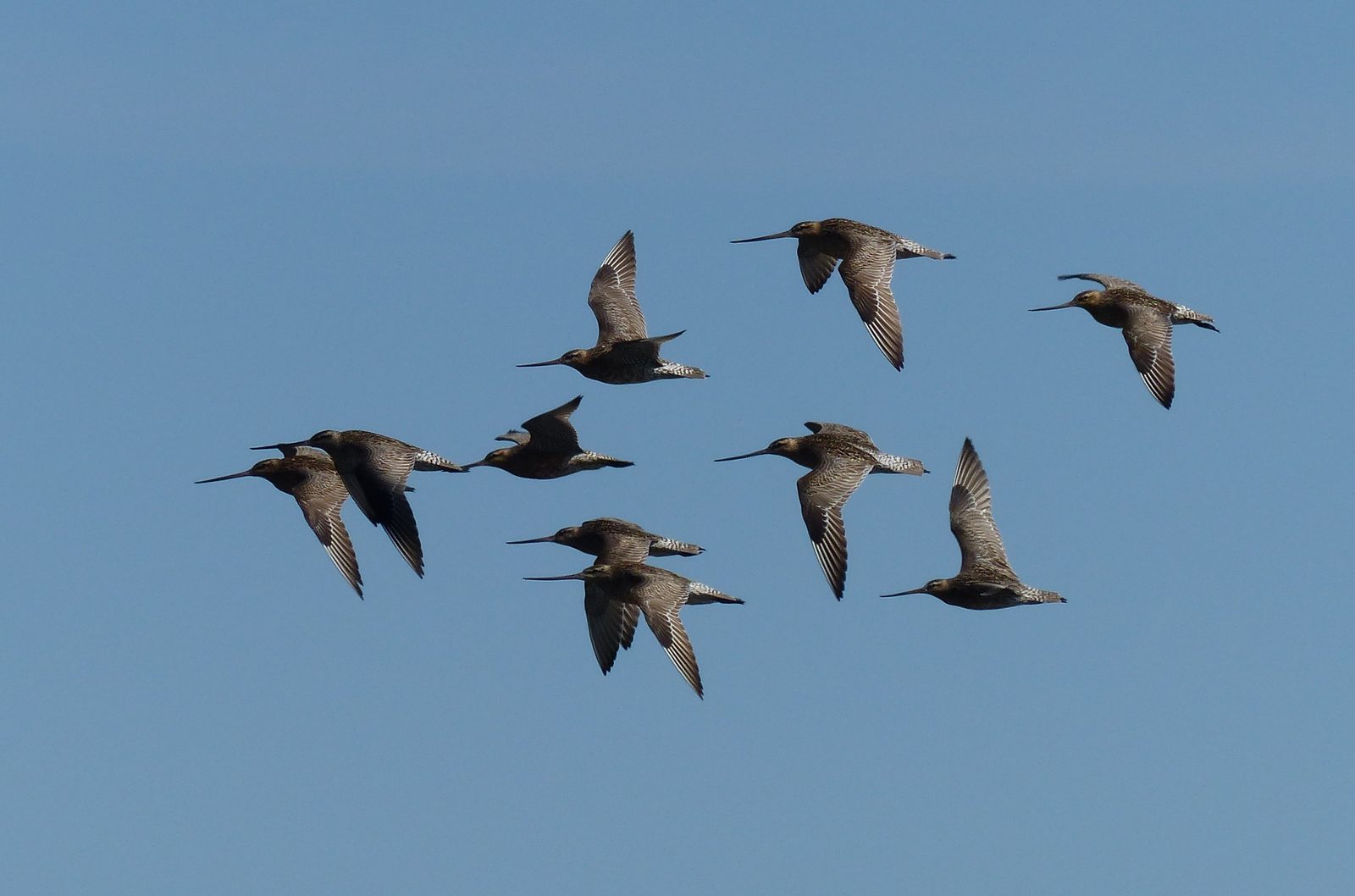
A Bar-tailed Godwit connects the Yukon-Kuskokwim Delta, the Yellow Sea and Moreton Bay every year of its life, transporting nutrients, pathogens, genetic material and climate signal across the flyway.
5Indicator function
Shorebird abundance, body condition and timing integrate signals about water quality, prey availability, disturbance and habitat continuity. Bar-tailed Godwit numbers at Moreton Bay have declined over thirty years.
6Cultural and economic
Shorebird presence underwrites Marine Park visitation, contributes to Ramsar standing, and co-locates with fishery nursery and blue carbon habitat. Delaware Bay birdwatching is valued at ~US$34 million per year; Yellow Sea ecosystem services at ~US$200 billion per year.
The Course picks up where this page stops.